My Ladakh Adventure With TOALT: An Honest Review of the 8-Day Leh-Nubra-Pangong-Hanle Itinerary
- 02 May 2026
I flew into Leh on the morning of 9 April 2026, three weeks earlier than the date TOALT itself recommends for the route (TOALT expedition page advises 30 April onwards). What followed was eight days that took me from the cobbled lanes of Leh to a 5,799-metre pass on the Chinese border. This post is half travelogue, half product review. I'll tell you the moments that stuck with me, and I'll be straight about whether the itinerary is worth the price.
Key Takeaways
Leh sits at 3,524 metres, and your first 36 hours are about respecting that. I made the rookie mistake of taking a long walk to Leh Market within four hours of landing, and paid for it with a thumping headache by sundown. The TOALT driver, a Leh local named Tashi, basically prescribed water and rest, and Day 2 felt entirely different.
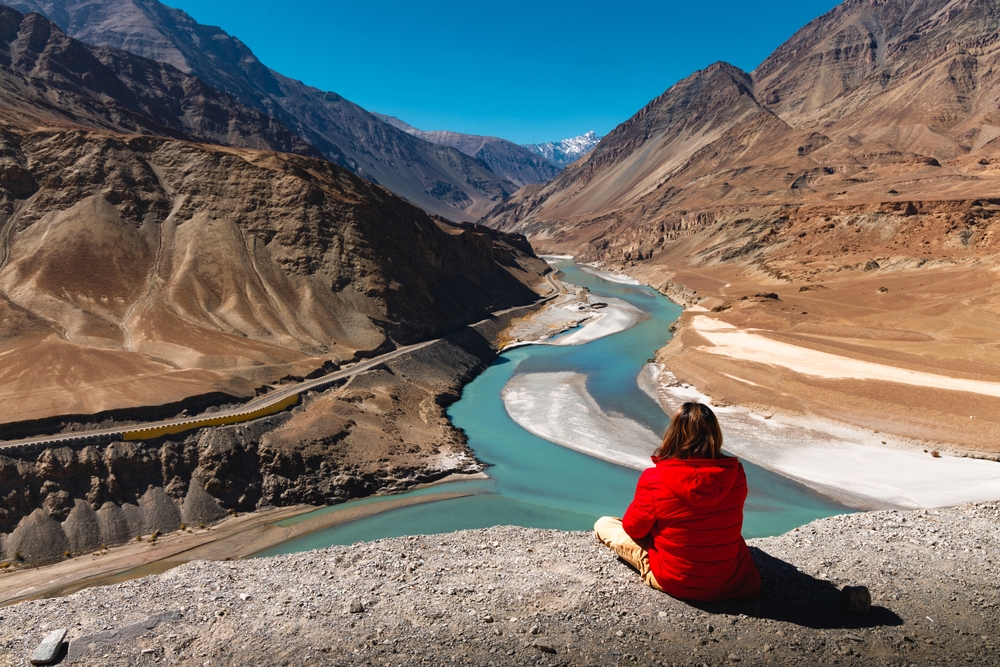
That second day is the standard sightseeing loop: Hall of Fame Museum, Pathar Sahib Gurudwara, Magnetic Hill, the Sangam where the Indus meets the Zanskar, and Shanti Stupa for sunset. None of it is mind-blowing on its own. What I appreciated was the pacing. Tourist arrivals to Ladakh fell from 5.25 lakh in 2023 to roughly 3.76 lakh in 2024 (Outlook Traveller, 2025), and in early April you feel that drop. Magnetic Hill had four other cars. The Hall of Fame had a single coach of army cadets. I had Shanti Stupa almost to myself at golden hour.
Day 3: Khardung La, then the dunes I wasn't expecting
Day 3 climbs to Khardung La (claimed at 18,379 ft) and drops into Nubra Valley. The pass photo-op is mandatory, but the real surprise was Hunder. After hours of scree slopes and switchbacks, the road opens into a stretch of cold-desert sand dunes with double-humped Bactrian camels grazing on tufts of grass. It is genuinely surreal.
What I noticed: Every "world's highest motorable pass" sign in Ladakh is contested. Khardung La's 18,379 ft figure has been disputed by GPS surveys for years. The TOALT itinerary still leans on these claims; treat them as marketing more than measurement.
Diskit Monastery's 32-metre Maitreya Buddha looks out over the valley like a sentinel. I'm not religious, but the silence up there does something. We rolled into our Nubra hotel by 6 pm with cold hands and wind-burnt cheeks, and a kettle of butter tea waiting.
The drive to Pangong via the new Agham-Shyok road shaves hours off the old route. Then you turn one corner, the valley opens, and the lake hits you. Photos under-sell it. Pangong Tso is a strip of impossible blue, 14,270 ft up, framed by mountains that change colour every twenty minutes. I sat on a flat rock for an hour and didn't speak. That was the moment I stopped checking my phone for the rest of the trip.
Day 5 is where the itinerary becomes special. Most Ladakh tours stop at Pangong and turn back. TOALT drives you another seven hours south to Hanle, and that detour is the entire reason I'd recommend this trip. Hanle is in the Changthang, near the Chinese border. There is one main street, no commercial mobile network, and a sky so dark it earned formal protection. The Indian Astronomical Observatory at 4,500 m has been operating since 2000, and a 22-km radius around it became India's first Dark Sky Reserve in September 2022 (Indian Institute of Astrophysics, 2022).
Altitude profile, day-by-day (metres) 6000 5000 4000 3000 Leh Leh Khardung La Nubra Pangong Hanle Umling La Leh 5,799 m
Source: Author's GPS readings cross-referenced with BRO road markers, April 2026.
I stood outside our guesthouse at 11 pm with the temperature near minus eight. The Milky Way wasn't a smudge, it was a structure. Saturn, Mars and what I'm fairly sure was Andromeda were all naked-eye visible. If you do this itinerary for one reason, do it for that hour.
Day 6: Umling La, where the air ran out
Day 6 is the pay-off. Hanle to Umling La and back. Umling La sat as the world's highest motorable pass at 19,024 ft from 2017 until 2025, when BRO's Mig La road at 19,400 ft pipped it (Wikipedia, 2025). TOALT's marketing still claims the world record. It's a small thing, but worth knowing.
What's not small is what your body does at that altitude. Walking ten metres from the car to the summit signboard left me lightheaded enough that I sat down for five minutes before the photo. Oxygen at 5,800 m is roughly half what it is at sea level. I'd been at 4,500 m the previous two nights, which probably saved me from anything worse than a mild buzz.
The Demchok detour on the way back puts you within sight of the Indian-Chinese border posts. The road is paved, the army presence is unmissable, and the silence is the loudest thing about it.
The return drive from Hanle to Leh threads through Shey Palace, Thiksey Monastery (often called the Potala of Ladakh), and Hemis, the largest gompa in the region. After five days of raw geography, the human-scale architecture and the morning chants at Thiksey were a different kind of restoration.
I spent my last evening in Leh Market eating apricot momos at a place called Lala's. The owner had moved back from Delhi during the pandemic and stayed. We talked for an hour about how April-October feeds his year. That conversation will outlast most of my photos.
The itinerary is well-designed and the price is reasonable. At Rs 28,999 for the tempo-traveller option (after the early-bird discount), the trip covers seven nights of decent hotels, all driver and permit costs, and breakfast plus dinner daily. What you actually pay for is the route logic — Hanle and Umling La are out-of-the-way enough that solo planning is genuinely hard.
What I'd flag honestly:
The "world's highest" claims need updating. Umling La isn't first anymore, and several altitude figures are inflated. None of this changes how spectacular the places are. It's just sloppy marketing for an otherwise-sharp operator.
Lunches aren't included, and on the long driving days you eat at whatever roadside dhaba is open. In April, several were shut. Budget Rs 400-600 per lunch and assume two of them will be Maggi noodles.
The age limit of 16-45 is real. The drive to Umling La in particular is genuinely demanding. I'm 30 and I felt it.
I'd go again, and I'd go through TOALT again. I'd just push the trip into May or June for warmer evenings and open cafes.
Is the TOALT Ladakh expedition suitable for first-time high-altitude travellers?
Yes, with caveats. The first two days in Leh are designed for acclimatisation, and the route ramps up gradually. Anyone with cardiac, pulmonary or severe blood-pressure issues should consult a doctor before booking, given the Day-6 climb to nearly 5,800 metres.
How cold was Ladakh in early April 2026?
Daytime ranged from 8 to 15°C in Leh and Nubra, dropped to about minus four overnight at Pangong, and bottomed out near minus eight at Hanle. Pack like you would for a Himalayan winter — thermals, down jacket, gloves, and a beanie.
Did the trip have decent mobile network?
Patchy. BSNL postpaid worked in Leh, Nubra and parts of Pangong. Hanle had no commercial network at all. Treat it as a digital detox and tell people back home in advance.
Is Umling La really the world's highest motorable pass?
No, not since 2025. BRO's road over Mig La (19,400 ft) now holds that record. Umling La at 19,024 ft is still the second-highest in the world (Wikipedia, 2025), and the experience is identical for anyone who isn't a record-keeper.
Ladakh in April is a different trip to Ladakh in July. Quieter, colder, occasionally awkward when something is closed. Also more honest, in a way I struggle to put into words. The TOALT itinerary did the heavy lifting on logistics; what I brought was attention. Both showed up. If you're sitting on a "should I or shouldn't I", book it.